
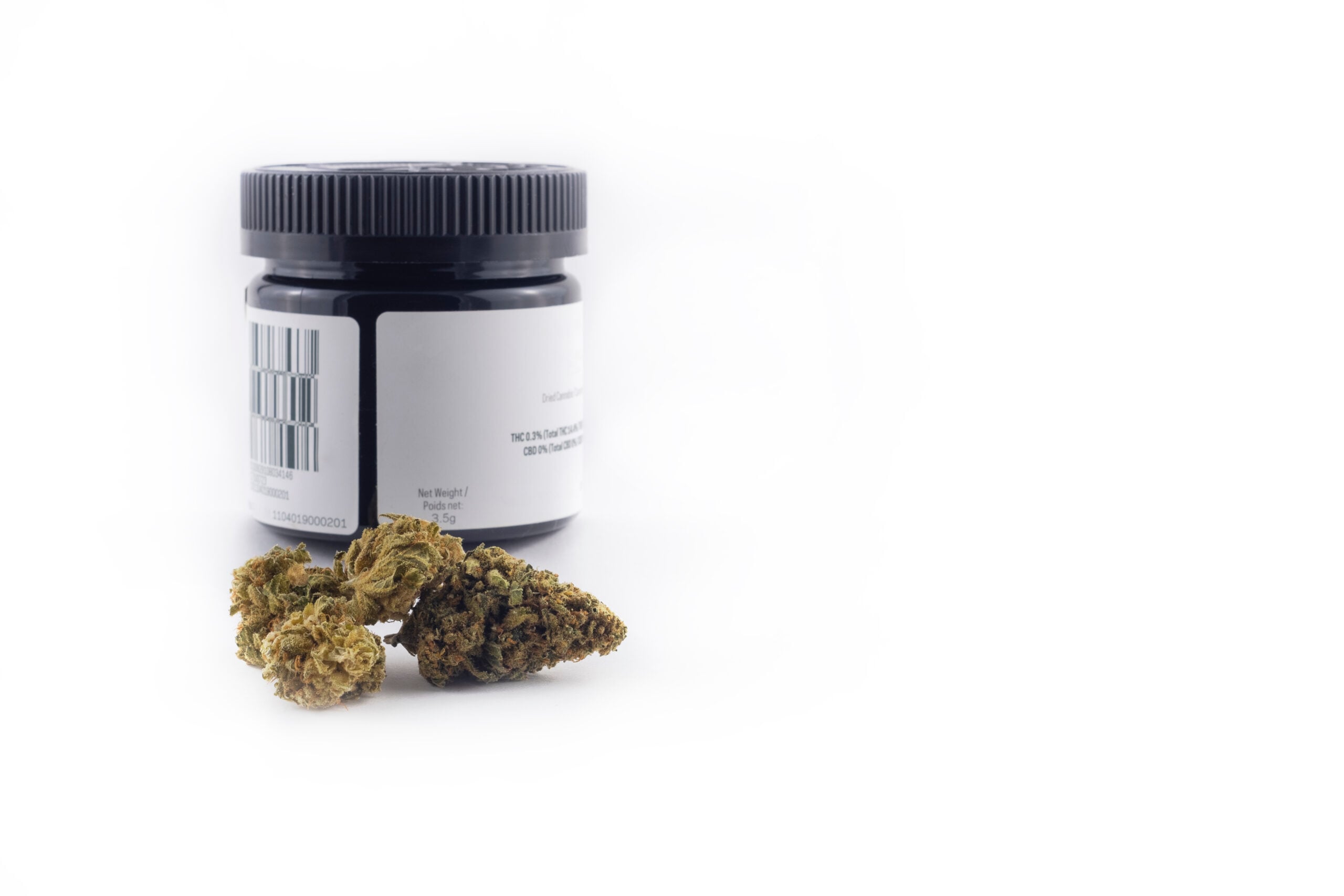
While it may look like a simple plastic jar, cannabis packaging and labeling requirements in New York are highly regulated. These labels are not just for branding (they provide a detailed, standardized breakdown of what’s inside the product, including cannabinoids, terpenes, and safety information).
Understanding how to read a cannabis label helps you:
- Compare products more accurately
- Understand potency and dosing
- Avoid unexpected experiences
- Shop with more intention and confidence
At Purple Owl, our knowledgeable team is always available to walk you through the details so you can make informed decisions.
THC & CBD: Understanding Potency
THC (Tetrahydrocannabinol)
Testing labels clearly show THC levels, the primary intoxicating compound in cannabis.
- Flower: listed as a percentage (e.g., 20% THC)
- Edibles/Tinctures: listed in milligrams (e.g., 10mg per serving)
This helps you estimate potency—but it doesn’t fully define the experience.
CBD (Cannabidiol)
CBD is another commonly listed cannabinoid. It is non-intoxicating but can influence how a product feels overall.
For many consumers, especially those shopping with intention, higher THC doesn’t automatically mean a better product.
Total Cannabinoids vs. THC %
THC is just one part of the equation. Labels also include total cannabinoids, which reflect the presence of additional compounds like CBG, CBN, and others.
Why this matters:
- Minor cannabinoids contribute to the overall experience
- Two products with the same THC % can feel different
- A broader cannabinoid profile often signals a more complex product
Terpenes: The Aroma and Experience Factor
Terpenes are aromatic compounds that shape both flavor and overall experience.
Examples:
- Limonene: citrus-forward aroma
- Pinene: pine-like, fresh scent
- Myrcene: earthy, herbal notes
Terpene information is becoming more common on labels as consumers look beyond THC and focus on the full profile of a product.

Product Type Indicators on Labels
Cannabis labels also provide key details about how a product is made and what to expect.
Flower
- Whole bud vs. ground flower
- Net weight (1g, 3.5g, 7g, etc.)
- Packaged-on date
Pre-Rolls
- Single vs. multi-pack
- Per-joint weight vs. total weight
Vapes (510 Cartridges & Disposables)
- Distillate vs. live resin vs. live rosin
- Cannabis-derived vs. botanical terpenes
- Cartridge size (0.5g vs. 1g)
Edibles & Beverages
- Total THC per package
- THC per serving
- Ingredient list and allergens
- Sugar content
These details help you match the product to your preferences and experience level.
Batch Numbers, Testing & Compliance
Every cannabis product in New York undergoes third-party lab testing.
Labels include:
- Batch numbers (track production and consistency)
- QR codes linking to Certificates of Analysis (COAs)
- Detailed breakdowns of cannabinoids, terpenes, and safety results
When you shop at a licensed dispensary like Purple Owl, you can trust that products meet state safety and testing standards.
Warning Symbols & State Requirements
New York requires clear, standardized warning symbols on cannabis packaging:
- Yellow triangle with THC symbol
- 21+ age warning
- Child-resistant packaging
These elements ensure products are clearly identified and handled responsibly.
How to Use Labels to Shop Smarter
Before purchasing, consider:
- Your preferred potency range
- Time of day you plan to consume
- Product format (inhalation vs. edible)
Labels provide the data, but our friendly budtenders provide the context. At Purple Owl, we encourage you to ask questions and explore options confidently.
Common Label Mistakes Shoppers Make
It’s easy to misread labels if you’re not familiar with the details. Common mistakes include:
- Confusing total THC vs. THC per serving
- Ignoring packaged-on dates
- Assuming higher THC = better quality
- Overlooking terpene profiles
- Not understanding vape differences (distillate vs. live products)
Taking a closer look at labels can significantly improve your experience.
Key Takeaways
- Cannabis labels provide critical information—not just branding
- THC % indicates potency, but not the full experience
- Terpenes and minor cannabinoids play a major role
- Product type details help guide your selection
- Lab testing ensures safety and transparency
FAQ
- What does THC percentage mean?
It indicates potency by weight for flower, not guaranteed effects. - Why does THC sometimes show a range?
Natural variation can occur between batches. - Is higher THC always stronger?
Not necessarily—terpenes and product format also influence the experience. - How do I know if a product is lab tested?
Look for a batch number and QR code linking to the COA. - What should beginners look for?
Lower THC levels and clearly defined serving sizes.
Confidence Starts with Education
Cannabis labels give you the tools to shop with clarity and control. While packaging may vary in design, the information it provides remains essential. Understanding these details helps you choose products that align with your preferences and expectations.
At Purple Owl, we combine transparency with conversation, so you never feel like you’re guessing.
Shop Smart at Purple Owl Cannabis Dispensary
Visit Purple Owl in White Plains to explore a thoughtfully curated selection of clearly labeled, lab-tested cannabis products. Whether you’re comparing terpene profiles, looking for a specific potency range, or trying a new product format, our knowledgeable budtenders are here to guide you every step of the way.
We take the time to explain what’s on the label, answer your questions, and help you find products that align with your preferences—so you can shop with confidence and leave with a better understanding of what you’re consuming.
DISCLAIMER: The contents of this blog are intended for informational purposes only. Always seek the advice of a physician or other qualified healthcare provider with any questions you may have regarding a medical condition.

